Authors

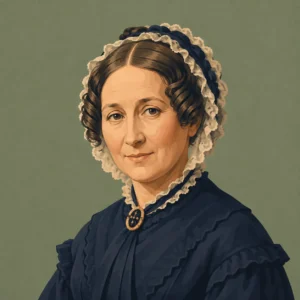
Sophie de Ségur

She started at fifty-six. Twenty books later, French childhood had a new accent. Born Rostopchine in St Petersburg, married into a title, then wrote for granddaughters who lived too far away to scold in person. Hachette put her in pink covers and sold her in railway stations: Sophie, model little girls, a donkey’s memoirs, a Russian general, a good little devil. The Fleurville books are the ones everyone remembers. She had a whole Bibliothèque rose besides. The countess is the brand. The mischief is the author.

Les malheurs de Sophie

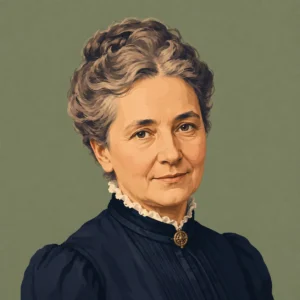
Johanna Spyri

Heidi ate her name. She had already written a shelf. Hirzel, then Zürich. A first story about a woman who could not leave a violent house. Then fifty more: goat-boys, woodcarvers, children named Rico and Gritli, summers near Chur that she kept putting on the page. The orphan on the Alm was four weeks of work and a century of sequels she did not write. Husband and son gone in the same year. She kept going. The mountain girl is the postcard. The rest is a Swiss writer who knew the valley was not simple.

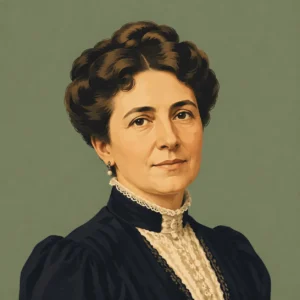
Júlia Lopes de Almeida

Rio wanted a woman in the Academy. Then it voted her out and gave the chair to her husband. She wrote anyway: bankruptcies, widows, households that look respectable until the books are opened. Columns on the front page of O Paiz. Novels the papers ran as serials. Children’s books when she felt like it. Fifty years of work, and a fairy tale is only one of them. Era uma vez... is the sugar. A Falência is the knife. Start wherever you like. She had both.

Era uma vez...

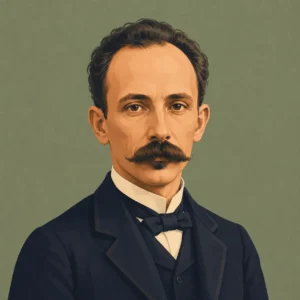
José Martí

Prison at sixteen. Exile after that. Then he tried to write a country into being. Havana, Spain, Mexico, New York: journalism that paid the rent, poems for a son, Versos sencillos, the essay that told Spanish America to stop copying Europe. He founded a newspaper called Patria, organized a war, and died in it. La Edad de Oro is four issues of a children’s magazine. The rest of him is a revolution in prose. The apostle is the statue. The sentences are the man.

La Edad de Oro

Agatha Christie

She learned poisons in a dispensary. Then she made a profession of them. Sixty-odd novels, a disappearance the papers treated like a plot, archaeology with a husband who dug, and a play that would not close. Poirot. Marple. A stolid superintendent. A pair of bright young things who treat crime as a hobby. She could do the country house, the Nile, the village, the train. The trick was never the same twice, even when the furniture looked familiar.

The Secret of Chimneys

H. G. Wells

Shop boy. Biology student. Then he frightened the century on purpose. Four shocks in four years: a machine that leaves the present, an island that should not exist, a man you cannot see, a war from the sky. After the scientific romances he wrote England as it actually was — drapers, patent medicine, class as a disease — then tried to explain the whole of history in plain prose and tell the planet to grow up. Fabian. Futurist. A journalist who would not stay in one genre. The time machine is one invention. He spent the rest of his life arguing with the world it implied.

The War of the Worlds · The Time Machine · The Island of Doctor Moreau

Herman Melville

He was famous for jumping ship. Then he wrote the book that emptied the room. Typee and Omoo sold because readers wanted cannibals and surf. Moby-Dick did not. After that: a clerk who would prefer not to, a slave ship that will not stay a legal problem, a confidence man on a riverboat, a customs inspector’s badge for nineteen years, poetry nobody asked for, and Billy Budd left in a drawer. The revival came decades after the funeral. The whale is the monument. The silence after it is the life.
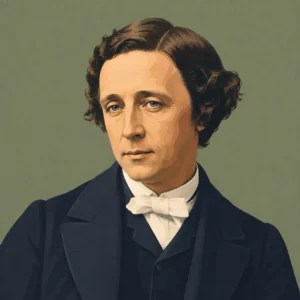
Moby-Dick; or, The Whale

Gaston Leroux

He spent an inheritance, then learned to live off deadlines. Law first. Then courtrooms, theatre notices, and the 1905 revolution as a correspondent who kept missing his holiday. He quit journalism for fiction and built Joseph Rouletabille — the locked yellow room, the reporter with the bullet-shaped head — plus Chéri-Bibi and a film company to turn the serials into pictures. Le Fantôme de l’Opéra was only a moderate hit. The musical ate his name. The Opera cellars are one address. The detective novels are the factory.

Le Fantôme de l'Opéra

Robert Louis Stevenson

Edinburgh lungs, a lawyer’s training he would not use, and a suitcase that never stayed shut. He wrote the donkey in the Cévennes, essays, a child’s garden of verses, then the books that ate the rest: an island with a map, a Highland flight, a respectable door that should not open after dark, a Scottish winter of brothers. Ill health chased him to Samoa. He died at forty-four with more Scotland still in the drawer. The pirate and the potion are the noise. The range is the author.

The Strange Case of Dr. Jekyll and Mr. Hyde

H. P. Lovecraft

Providence. Night walks. A man who treated the twentieth century as a personal insult. He sold to Weird Tales for pennies, lived on correspondence, and built a private cosmology in the leftover hours: a colour that should not fall from the sky, a harbour town that should not have gills, mountains that should not be climbed, a painter whose models were not posing. The Call of Cthulhu is one dossier in a drawer full of them. He died at forty-six, almost unread. The cult came later. The sentences are baroque on purpose. So is the loathing. Read him for the dread. Do not confuse the mythos with the man.

The Call of Cthulhu

Rudyard Kipling

Bombay first. Then an English boarding-house that taught him how a child learns to hate. He went back to India as a very young newspaperman and wrote the station, the barracks, the hill, the lie that keeps an empire running. Plain Tales from the Hills. Soldiers who talk like soldiers. Ballads the music halls stole. Vermont winters, a novel about a boy on the Grand Trunk Road, stories told “just so,” Sussex ghosts, a Nobel he was too young for, a war that took his son. The jungle is one address. He had a whole map. The empire loved him. Later readers have not always. The sentences still cut.

The Jungle Book

Enrique Gaspar y Rimbau

He was a diplomat who never left the theatre. An actor’s son, zarzuelas from thirteen, Madrid comedies, then the consular posts — Greece, France, China — and dozens of plays for a public that wanted a tune and a sting. El anacronópete is the flying box he built when the stage would not take it. The iron ark is what posterity kept. He had already filled the house without it.

El anacronópete

José Maria de Eça de Queirós

Portugal’s sharpest novelist spent his working life as a consul — Havana, Newcastle, Bristol, Paris — and wrote the country from a distance. Coimbra, the Farpas, then the books that took Lisbon apart: a priest, a cousin, a great family rotting in style, a holy relic, a manor, the city against the hills. O Mandarim is one fable in the drawer. He died in Paris. Lisbon is still answering him.

O Mandarim

José de Alencar

He put Brazil on the page in a Portuguese that was no longer Lisbon’s. Ceará, then law and newspapers in Rio, a seat in the Chamber, the Ministry of Justice. Novels of Peri and Iracema, of women priced in the capital, of the sertão and the pampas, plays, a quarrel with the Empire’s official poet. Cinco Minutos was the first serial. He died before the Republic. The language stayed.

Cinco minutos

Arthur Conan Doyle

He was a doctor who went to sea, a historical novelist who wanted Scott’s armour, and the man who invented a detective he could not get rid of. Edinburgh, a whale ship, a failed eye practice; then medieval companies, Napoleonic cavalry, a professor who finds a world that should not exist, the Cape as a volunteer surgeon, campaigns that sprung men from wrongful conviction, and, late, a gospel of spirits and fairies that cost him the sceptics. Holmes is the habit the century kept. Doyle had already enlisted in every other age he could reach.

The Adventures of Sherlock Holmes

Gerhart Hauptmann

Silesia sent a sculptor who took the German stage. He trained in Breslau and Rome, then wrote the scandal of Before Dawn, weavers in revolt, comedies of petty theft, tenement rats, a child’s assumption into heaven, a sunken bell, novels of a fool in Christ and a heretic in the south. The Nobel caught the variety, not one manner. Bahnwärter Thiel is an early study from the pines. He stayed. Others left.

Bahnwärter Thiel

Friedrich Nietzsche

A pastor’s son who would not keep the faith, a Greek scholar who would not keep the chair. Basel made him a professor at twenty-four. He wrote on tragedy and on Wagner, then broke with the maestro, left the university, and spent a decade in boarding houses: aphorisms, attacks on morality and pity and Germany, a genealogy of our pride, a case against his old idol, a last book about himself. Zarathustra is one voice. They argue. Turin ended the writing. What appeared in his name afterward is another story. Do not start with the slogan. Read the man who walked.

Also sprach Zarathustra

Lewis Carroll

Oxford knew him as Dodgson: mathematics lecturer, deacon, photographer, a man of committees and ciphers. He wrote Euclid’s defense, symbolic logic, puzzles that bite, a way to count votes, university rows in pamphlet form, a snark hunt that ends in a vanishing, and two late novels so stuffed with sermons and talking creatures that the crowd would not follow. He never took priest’s orders. He wrote letters by the thousand. Wonderland ate the name. The don was still at his desk.

Alice’s Adventures in Wonderland

Robert W. Chambers

He trained as a painter in Paris, hung work in the Salon, and came home to sell drawings to Vogue. Then he wrote instead. Seventy-odd books after that: a student novel of the Quarter, weird tales he soon abandoned, historical romances of the Revolution and the Civil War, Paris on fire, and society novels that paid for the Adirondack house. Critics called him the shopgirl Scheherazade. The public bought him by the crate. The King in Yellow is the book that outlived the bestsellers. Chambers had already moved on. The yellow stain did not.

The King in Yellow

F. Scott Fitzgerald

He named an age, then had to live in it. St. Paul, Princeton, a war that ended before he got there. This Side of Paradise made him famous at twenty-three. After that: a factory of magazine stories to fund the hotels, Paris, the Riviera, Hollywood, a novel of the Divers that took nine years, a last tycoon he did not finish, and essays about coming apart. The Great Gatsby sold poorly. He died at forty-four, sure the work had failed. The revival is not the life. The life was the bill for the legend.

The Great Gatsby

Gertrudis Gómez de Avellaneda

Cuba sent her. Madrid could not make her small. She left Puerto Príncipe at twenty-two, signed herself La Peregrina, and took the Spanish Romantics on their own ground: poems that still stop a room, twenty plays, biblical tragedy, a novel of Cuauhtémoc, essays arguing women could govern. The Royal Academy locked the door because she was not a man. Theatres opened it. Baltasar packed the house. Sab was banned in Cuba. Two countries claim her. Neither made her polite.

Sab

Jacinto Benavente

He took the Spanish stage off its stilts and made it talk. Madrid, a doctor’s son, law abandoned, Europe wandered. Then a hundred and seventy plays: drawing-room knives, an invented provincial town he could skin at will, rural houses that will not stay quiet, a theatre for children, letters in women’s voices that first made him a stylist. He killed the old verse tragedy with conversation. The Nobel found him on tour in Argentina, too busy for Stockholm. The mask comedy is the one that travelled. He had already filled the house without it.

Los intereses creados

Carlo Collodi

He fought for Italy, then had to explain the country to its children. Carlo Lorenzini of Florence ran a satirical paper the censors kept shutting, volunteered twice in the wars that unified the peninsula, wrote comedies, a parody novel, and sketches of Tuscan types. After unification he sat on the theatre board and, when the new kingdom needed schoolbooks, invented Giannettino — a rascal who teaches geography and civic manners by misbehaving. He also put Perrault into Italian. The puppet arrived late, in a children’s weekly, from a journalist already tired of sermons. Disney sanded him down. Collodi never did.

Le avventure di Pinocchio

L. Frank Baum

He failed at almost every honest trade, then built a country. Actor, shopkeeper, newspaper editor, chicken breeder — all of it went under. Then children’s books: Mother Goose in prose, a life of Santa Claus, and a cyclone that would not stop. Fourteen Oz novels because the mail would not let him quit, plus dozens of other books under other names, musicals, and an early film studio that also failed. The 1939 picture ate the first book. Baum had already written a shelf, and a map that kept growing after he was gone.

The Wonderful Wizard of Oz

Vicente Blasco Ibáñez

He ran Valencia before Hollywood ran him. Novelist, deputy, founder of a newspaper that kept landing him in court. The early books are the huerta: rice, mud, orange groves, people who work and starve in the same light. Then he went wide — the war, the ring, Argentina, a bestseller the silent pictures turned into Valentino. Republican, anticlerical, shot at, exiled. Sangre y arena is one of the later moods. The Valencian novels are the ground he stood on.

Sangre y arena

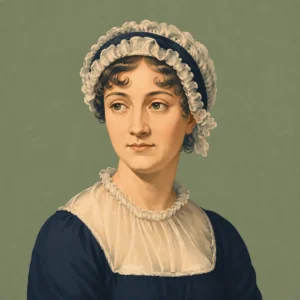
Jane Austen

She published without her name and still took the room apart. Six novels, not one dance. Sense and Sensibility first. Then the book everyone quotes. Then Mansfield Park, Emma, a gothic she was teasing, and Persuasion, which is quieter and does not care. Juvenilia that already knew how to bite. A seaside town left unfinished when she died at forty-one. Courtship is the surface. Money, family, and who is allowed to speak are the plot. She never needed a battlefield.

Pride and Prejudice

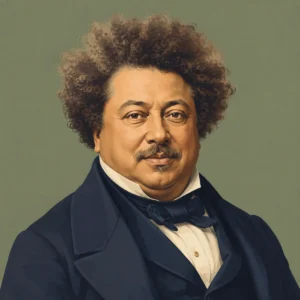
Alexandre Dumas

He began in the theatre. The newspapers could not print him fast enough. Son of a French general and a Haitian grandmother, Dumas took Paris with Romantic drama, then discovered the serial: musketeers, a count who waits, a tulip, a man in an iron mask, travel books, a hundred thousand pages. He built a theatre, spent a château, sailed with Garibaldi, and kept a workshop of collaborators because one man could not feed that appetite alone. The four friends are the noise. The factory is the author.

Les Trois Mousquetaires

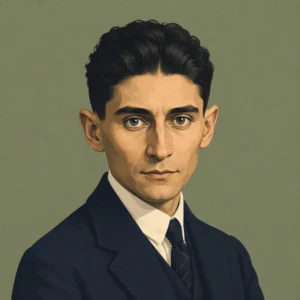
Franz Kafka

He wrote after the insurance office closed. Prague, German on the page, Jewish in a city that made that a daily negotiation. A few stories while he lived. Three unfinished novels in a drawer he asked a friend to burn: a trial with no charge, a castle that will not admit you, an America he had never seen. Max Brod did not light the match. The insect is what everyone remembers. The rest is offices, fathers, hunger artists, and a joke so dry it still cuts.

Die Verwandlung

E. T. A. Hoffmann

By day he was a Prussian judge. By night he let the furniture think. He composed an opera, drew caricatures that got him posted to the provinces, reviewed Beethoven, and invented Kapellmeister Kreisler — the musician who cannot live in a sensible world. The Nutcracker was his, and darker than the ballet. So was one of the first crime stories. So was a tomcat writing his memoirs beside a genius going mad. The Sandman is one door into that house. There are many rooms. The doors do not stay shut.

Der Sandmann

Horacio Quiroga

He moved to the jungle and made the short story do what the novel would not. Uruguayan, then a settler in Misiones: farmer, film tinkerer, consul, a man who kept putting a household where the forest did not want one. Two hundred stories — snakes, fever, machinery that fails, talking animals for children, exiles who cannot go home. Poe was on the shelf. The Paraná was in the room. Cuentos de amor de locura y de muerte is a title that could cover the lot. It is not the only book he left in the clearing.
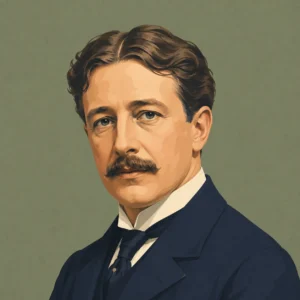
Cuentos de amor, de locura y de muerte

Maurice Leblanc

He wanted to be Maupassant. A magazine asked for a thief. Ten years of psychological novels the critics liked and the public ignored. Then Je sais tout wanted a French answer to Holmes, and Arsène Lupin walked in — gentleman, burglar, and a career that would not let go. Leblanc tried to escape him: other detectives, science fiction, an earthquake that welds England to France. The thief kept merging them back. Rouen sent him. Paris made him. Lupin paid the rent and took the name.
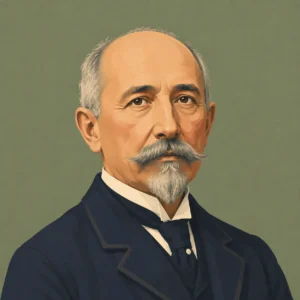
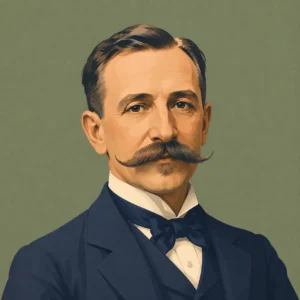
Arsène Lupin, gentleman-cambrioleur

Bram Stoker

For twenty-seven years he ran Henry Irving’s Lyceum — contracts, tours, the most famous theatre in London — and wrote in the hours the stage did not take. Dublin civil servant first. Then the man behind the star. In the leftover time: an Irish novel, Egyptian resurrection, second sight and sea-caves, a woman who refuses the life laid out for her, a late and ugly worm in the English countryside. Dracula ate his name. It was not the only thing in the drawer. He liked a lock, a letter, and a room that should not open. The count is only the most famous guest.

Dracula

Emily Brontë

The problem is not that she wrote one novel. It is that everyone stops there. She was a poet first — Gondal, exile, the dead who will not stay buried — publishing as a man because those poems were not supposed to come out of a Yorkshire parsonage. She baked the bread, walked until the weather broke, refused London, and built a private empire with her sister Anne. Wuthering Heights is what happened when that weather hit a house. The poems are the weather itself. Gone at thirty.

Wuthering Heights

Mary Shelley

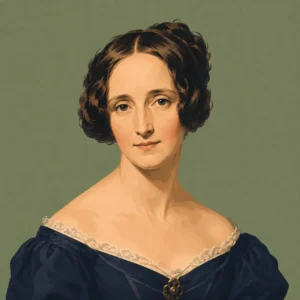
The world kept her as the girl who wrote a monster. She had no intention of dying as one. Daughter of Mary Wollstonecraft and William Godwin, widow of a drowned poet, she had bills, one surviving child, and a profession. After Frankenstein: a plague that empties the earth, Italian tyrants, a pretender to the English throne, travel books, lives of scientists, and the edition of Percy’s poems that made him canonical. Reviews. Cyclopaedia entries. Thirty years of keeping a household and a reputation. Read her for the spark at eighteen if you like. Stay for the woman who outlived the myth and kept writing.

Frankenstein; or, The Modern Prometheus

Jules Verne

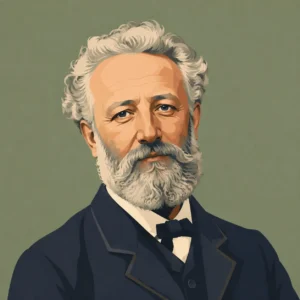
Fifty-odd novels. A theatre career he would not quit. A stock-exchange job he used as cover. He did not write one wager around the world. He spent decades on the Extraordinary Voyages: balloons, a cannon to the moon, captains who will not surface, a courier across Siberia, a Paris of the future his publisher buried. He researched like a clerk and plotted like a showman. After the shot in the leg, the machines keep running. The men inside them do not always deserve them. If you only know the eighty days, you have met the timetable. You have not met the author.

Voyage au Centre de la Terre · Vingt mille lieues sous les mers · Le Tour du monde en quatre-vingts jours

Pedro Antonio de Alarcón

Soldier, duellist, war correspondent, deputy, diplomat, academician — and then, when he had used up the rest, a novelist. He came out of Guadix too loud for one career. Morocco as a witness. A swing from anticlerical firebrand to Catholic conservative, with the argument dumped into fiction instead of speeches: El Escándalo, El Niño de la Bola, the Andalusian farce that became Falla’s ballet. El Capitán Veneno is one mood among many — pride, ridicule, a Spain that will not sit still. Do not file him under a single officer. He had more lives than that.

El Capitán Veneno